

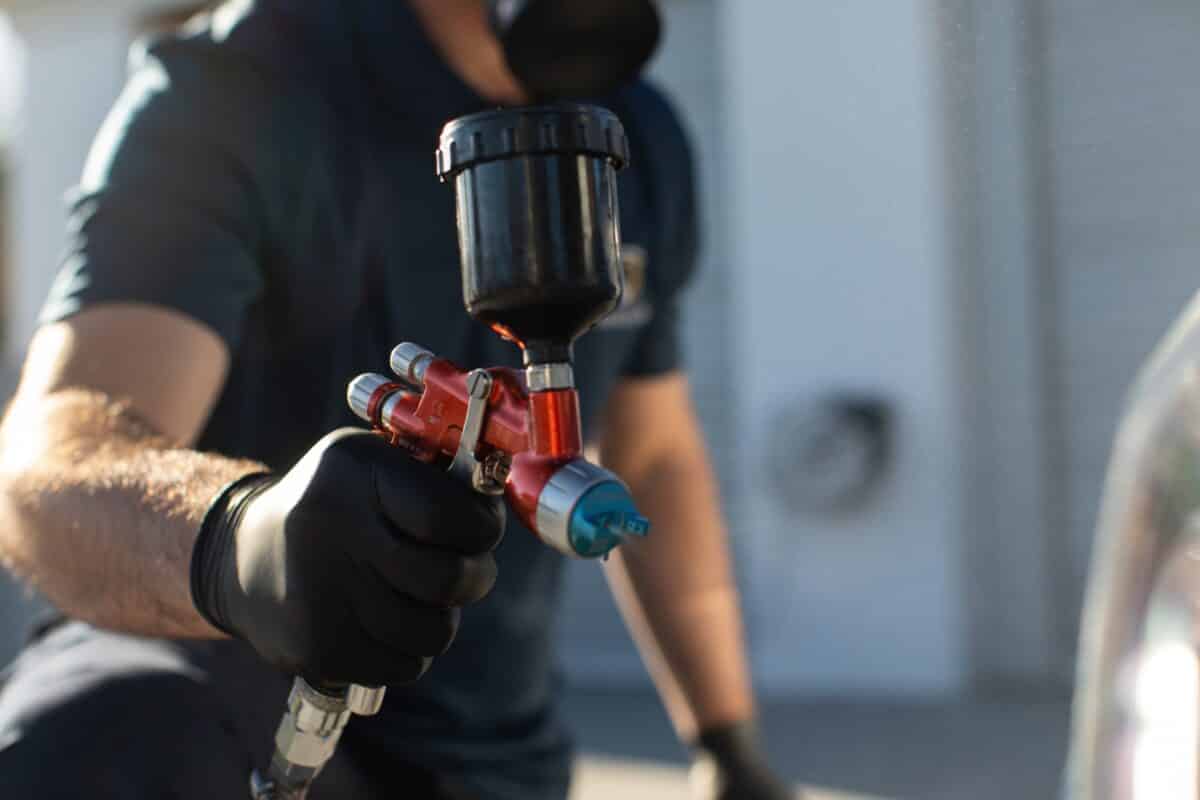
That “Yes, this colour exactly” comes from a rigorous process involving far more than simply looking up a code in a book. You might assume red is red or white is white. You would be incorrect. Automotive paint is a complex chemical formulation. It involves depth and varying shades. It changes under different lights. Getting it wrong is painfully easy.
A bad repair looks like a patch on an old pair of jeans. It draws the eye for all the wrong reasons. Getting it right requires a mix of technology and intense human observation. We do not guess. We do not hope for the best. We engineer the match until it is indistinguishable from the factory finish.
Why Relying on the Manufacturer Code Is Risky
Every vehicle leaves the assembly line with a specific paint code. You can usually find this on a sticker inside the door jamb. Many people believe this code is the final answer. They think you type the code into a computer and the perfect paint comes out. This is a massive misconception. The code is merely a starting point. It gets us into the correct family of colours. It does not account for the variables that happened at the factory.
Car manufacturers build vehicles in different plants around the world. The plant in Japan might use a slightly different batch of paint than the plant in America. The supplier for the bumpers might differ from the supplier for the bonnet. These slight variations mean the “same” colour code can actually have several alternate shades. We call these variants. One might be yellower. Another might be bluer. If a technician simply mixes the standard formula, the new paint will likely clash with the rest of the car. We must identify the specific variant on your specific vehicle.
How Environmental Factors Alter Every Batch
Your car does not live in a vacuum. It lives in the real world. It sits in traffic. It bakes under the scorching Australian sun. It gets rained on. It gets covered in dust. Ultraviolet rays are the enemy of pigment. Over time, UV exposure bleaches and alters the paint. This happens slowly, so you never notice it day to day. But the change is significant over a few years.
A car manufactured five years ago is no longer the same colour it was on the showroom floor. If we applied fresh factory-standard paint to a five-year-old door, the repair would look too bright. It would look too rich. It would stand out instantly. We have to account for this aging process. We have to mix the paint to match what your car looks like today. We do not match what it looked like on day one.
We adjust the formula manually to simulate natural wear:
- Adding a drop of black to dull the brightness
- Adding a touch of white to simulate a fade
- Tuning the balance for subtle variations caused by the sun and elements
This is where the skill of the technician becomes absolutely critical.
Why Mobile Techs Must Adjust for Sun Fade
You cannot ignore the impact of sunlight on horizontal versus vertical surfaces. The bonnet and roof catch the most direct sun. The doors catch less. The bumpers catch light differently due to their curves. This means paint can fade at different rates on the same car. When we repair a scratch on a bumper, we have to match the adjacent panel. We look at the quarter panel. We look at the boot lid. The transition must be seamless.
We check the colour in direct sunlight. We check it in the shade. We check it using a colour-corrective light that mimics high noon. Artificial garage lighting hides flaws. It makes mismatched colours look fine. Sunlight reveals everything. We do the work right there in your driveway so we can see exactly how the paint reacts to the real environment. A shop environment often lacks this natural lighting advantage. We force the paint to prove itself under the harshest scrutiny before we spray a single drop.
How We Analyse the Metallic and Pearl Structure
Modern car paints are rarely solid colours. Most contain metallic flakes or pearl essences. These microscopic particles reflect light to give the car its sparkle. Matching the background colour is only half the battle. We also have to match the behaviour of these flakes.
Factors we consider include:
- Flake size and texture range from coarse to fine
- Colour of flakes such as silver, gold, or blue
- Orientation of the flakes, which affects light reflection
If we use a coarse flake on a car painted with a fine flake, the texture will look grainy. It will look rough. Even if the shade of blue is perfect, the sparkle will be wrong. The light will hit it and bounce off incorrectly.
We control this through our application technique by:
- Adjusting the air pressure in our spray guns
- Changing the speed of our hand movement
- Altering the distance from the panel
This allows us to replicate the exact shimmer of the original finish.
Why Precision Equipment Beats the Naked Eye
We use advanced technology to verify our decisions. Spectrophotometers are devices that read colour electronically. We place the device on the panel near the damage. It takes a reading of the pigment values. It analyses the hue and the chroma and the lightness. It connects to a massive database of formulas. The software suggests the closest match based on the actual condition of your paint.
This takes the guesswork out of the initial selection. It gets us 95 per cent of the way there. But machines are not perfect. They can struggle with complex pearls or very dark colours. This is where the human element returns.
We complete the process with:
- Spraying a test card for side-by-side comparison
- Holding the card against the panel to spot discrepancies
- Adjusting with our eyes for the final one per cent perfection
We do not spray the car until the test card vanishes against the existing paint.
How We Contain the Repair Area
A major advantage of our mobile method is our focus on keeping the repair area small. Traditional bodyshops often paint the entire panel for a small scratch. They might even paint the adjacent panels to hide a bad colour match. We call this blending. But keeping the repair localised preserves more of your original factory finish.
We only repair the damaged spot. The steps include:
- Sanding down the scratch or scrape
- Priming the area
- Applying the base coat colour only to the specific damaged section
- Feathering the edges for seamless integration
- Applying a clear coat to seal the repair
This technique requires an exact colour match. There is no room for error when you are spot repairing. If the colour is off, you will see a distinct ring where the repair stops. Our precision allows us to be surgical. You keep more of your original car.
Why a Mismatched Patch Destroys Resale Value
You might wonder why this matters so much. You might think a close match is good enough. You would be making a financial mistake. A car is an asset. Its value depends heavily on its cosmetic condition. A visible repair screams that the car was damaged. It makes buyers suspicious. They wonder if the damage was structural. They wonder if the car was in a major accident. They start looking for other flaws.
A mismatched bumper can knock hundreds or even thousands of dollars off the resale price. It signals neglect. It suggests the owner cut corners.
Seamless repairs maintain your vehicle’s value by:
- Leaving the car looking pristine and untouched
- Protecting your investment for future resale or trade
- Avoiding suspicion from potential buyers
You are paying for the retention of value. Quality repair work pays for itself when you eventually sell or trade the vehicle.
Final Word
We consider colour matching a strict discipline. It combines chemistry and physics and keen observation. It is not something you can rush. It is not something you can do with a generic touch-up pen from an auto parts store. You need the right eyes and the right tools and the right hands. We bring all of these directly to your location. Jim’s Scratch & Dent provides the expertise required to make scratches and scrapes disappear completely.
For anyone seeking a repair that looks seamless, performs perfectly, and maintains your vehicle’s value, our mobile service is the obvious choice. Every technician is trade qualified and courteous, using the latest mobile repair technology to bring professional results straight to your driveway. With perfect colour matching, no impact on your insurance, and Jim’s Satisfaction Guarantee, you can have the work completed with complete assurance and minimal disruption.
When we leave, the only thing that should be visible is your reflection, not the repair.
Frequently Asked Questions
Q. Can you come to any location or are there restrictions on where mobile repairs are done?
A. We can travel to most residential driveways and workplaces provided we have a suitable workspace with access to power. We generally can’t work in multi-level or undercover carparks, or areas that have very limited space.
Q. How do you handle cars with aftermarket paint jobs or custom colours?
A. We can match custom paints, though it takes more testing. We measure the exact shade and adjust the formula to replicate it precisely.
Q. Will the repair smell or leave fumes around my home?
A. Minimal smell is produced. We use low-odour, environmentally friendly paints, and fumes dissipate quickly. Most neighbours won’t even notice us working nearby.
Q. What if I have a car that hasn’t been washed or waxed for a while? Can that affect the colour matching?
A. Surface contaminants like dirt or wax can affect initial readings. We clean and prep the area on-site to ensure the match reflects the actual paint.
Q. Can small repairs be done on luxury or high-end vehicles without affecting insurance coverage?
A. Yes. Our minor, localised, high-quality repairs usually don’t require insurance claims, ideal if you want to preserve the car’s records.
Q. How do you ensure the repaired area won’t peel or chip over time?
A. Proper surface prep and correct layering of primer, base coat, and clear coat are key. We follow precise curing and application to make the repair adhere perfectly.
Q. Can you match paint on a car that has been repainted multiple times before?
A. Yes, but it may require careful testing. Older repaint layers can slightly affect the final shade, so we test and adjust until the new repair blends perfectly.